
Home About Us Analytical Techniques Problem Solving Analysis Consultancy Industrial Sectors Contact Us
Analytical Techniques
Chemical Analysis Techniques
X-ray Fluorescence (XRF)
Atomic Absorbance (AA)
UV Spectrophotometer
FTIR
GC and HPLC Method Development and Validation
HPLC
Gas Chomatography (GC)
Thermal Gravimetric Analysis (TGA)
Wet Chemical
RoHS Compliance Testing
Chemical Analysis

Contact Us
Print this page

Chemical analysis covers a wide range of techniques and an even broader range of samples including solids, liquids and gases from raw materials to finished products.  Analysis may involve using a particular or combination of techniques and may be related to a specific problem to solve or product of process research and development.  At LPD Laboratory Services our team of dedicated specialist technical staff have access to many chemical analysis and materials analysis techniques and can advise how best to best address customers requirements in a cost effective and reliable way.

Our Industrial scientist and engineering backgrounds  and typical technical expertise mean practical context orientated interpretation of the experimental data is included as a matter of course, giving customers the confidence to act on directly upon the results with appropriate support. 

Some of the chemical analytical techniques available at LPD Lab Services are:
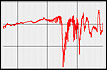
FTIR Spectrophotometer (Fourier Transform Infra-Red)

FTIR or IR is ideal for identification and quantification of organic species even at trace levels.  These include polymers (plastics), paints, binders, adhesives as well as unknown organic compounds, stains and solvents, even when tiny amounts of sample are only available.  Solvent extractive work allows contaminant and delamination investigations coupled with surface analysis techniques.


X-ray Fluorescence (XRF)

XRF is a sensitive quantitative bulk inorganic analytical technique for solids and liquids with a high sample throughput.  XRF can be used for unknown materials or powders, raw materials, glasses, building materials, paint filler and pigments, contaminants etc..


Atomic Absorbance Spectrophotometer (AA or AAS)

AAS is used for quantitative elemental and trace elemental analysis after dissolving the material into solution. It is frequently used for assay of metallic alloys, trace additives and some non-metals after wet chemical preparation.


Gas Chromatography (GC)

GC is for chemical deformulation, trace organic and contamination analysis as well as Health and Safety monitoring of organic species.


High Pressure Liquid Chromatography (HPLC)

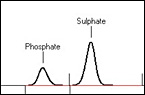
HPLC is used for analysis of trace organics, ions in liquids and identify and quantify individual compounds in a mixture.  Applications include finding evidence of exposure to corrosive environments, presence of sulphates, nitrates, chlorides, fluorides etc..


UV and Visible Spectrophotometer

UV/Vis is suitable for trace organic analysis, colorimetric and specular reflection measurements coupled with a diverse range of wet chemical preparation techniques.


Thermal Gravimetric Analysis (TGA)

By ramping temperature and measuring weight TGA monitors chemical and material transformations as compounds degrade or form at different temperatures.


Chemical Product Deformulation and Reformulation

Deformulation of chemical products to determine their composition, how they are manufactured and substitute or improve recipes to stimulate or improve the products performance.


Wet Chemical Techniques and General Laboratory

This details the other capabilities and facilities available in the laboratory including Wet Chemical Analysis, deformulation and reverse engineering equipment, Vacuum Leak Testing and particle size measurement instrumentation.


Materials Analysis and Failure Investigation

Product and component materials analysis achieved by combining chemical, materials science, failure analysis, reverse engineering and industrial process experience coupled with materials analysis techniques.


Please contact us if you do not see the analytical technique you require, we may still be able to help you.

Copyright 2013 LPD Lab Services Ltd. All rights reserved.