

Corrosion Testing Services UK
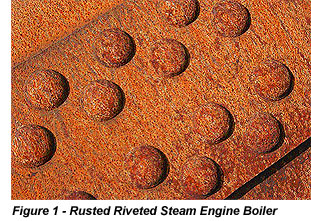 Corrosion analysis and investigation is a core problem-solving service at LPD Lab Services, an independent, UKAS-accredited analytical laboratory based in Blackburn, East Lancashire. Corrosion, oxidation and degradation commonly spoil a product's appearance, weaken components, trigger remedial action and, in the worst case, cause product failure. Often the cause is the aggressive environment a product is exposed to over its operational life. In plastics and paint coatings it can appear as embrittlement, discolouration, paint delamination or solvent swelling; metals can be attacked by aqueous corrosion, oxidised at elevated temperature or damaged by stress corrosion cracking. Our corrosion investigations identify the failure mechanism, establish the root cause and recommend how best to avoid or solve the problem in the future.
What Causes Aqueous Corrosion?
For aqueous corrosion to occur, four conditions must be present together:
- An anodic area where the component's degradation, i.e. metal dissolution, occurs.
- A cathodic area, which provides the driving force for the corrosion process.
- An electrolyte to transport corrosive species and various ions.
- An electron conduction path connecting the anode and the cathode.
When all four are present, a self-sustaining electrochemical cell is created. Even a thin film of surface moisture can act as the electrolyte, which is why corrosion can progress in apparently benign conditions.
Factors That Control the Corrosion Rate
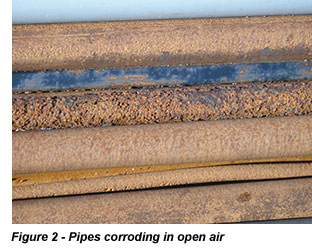 The corrosion rate is dependent on many factors, including the following:
- The relative areas of the anode and the cathode.
- The electrolyte conductivity, and whether the metal is immersed in water, buried underground, or corroding as a result of surface moisture related to humidity.
- The availability of fresh reactants; corrosive species such as oxygen and chloride ions, and protons (H+).
- The removal of corrosion products, and the tendency of the oxide to spall away, which allows attack to continue virtually unhindered.
- The resistance in the metallic circuit.
- The electrical resistance and durability of any protective coatings or surface treatments.
- Temperature and pH.
Each factor is assessed during an investigation so that the contribution of the environment can be separated from design, material and process factors.
Why Corrosion Protection Systems Fail
Mechanisms to minimise the impact of environmental attack are often already in place, but they can still fail for a range of reasons:
- Unusual or unexpected exposure conditions (chemical, humidity, pH, turbulence from flowing water, differential aeration, etc.).
- Mistaken use, or the wrong choice of material or metal alloy for the environment.
- A galvanic cell set up with another nearby metal component electrically in contact with the corroding part, with the circuit completed by an electrolyte, which can be as little as surface-adsorbed water.
- A failed protection system.
- Ineffective or insufficient biocides or inhibitors in a closed system such as a heating system, where microbiological (microbial) attack can be very aggressive.
Corrosion Protection Mechanisms We Assess
 The protection systems designed to slow down or prevent corrosion that we routinely assess include:
- Passivation, having or deliberately growing a protective oxide. Stainless steels rely on a protective surface oxide, and aluminium and titanium are often anodised to grow thicker protective oxides.
- Choice of material or alloy to ensure the material is passive or immune in the environmental conditions the component is likely to see over its life.
- Avoiding two-phase alloys, which can provide the anode and cathode locally close together and give phenomena such as dezincification of brasses, where one phase is preferentially corroded away.
- Cathodic protection, using a sacrificial anode or an impressed current to make a key component cathodic so it does not corrode.
- Anodic protection, using an impressed current to keep a material passive.
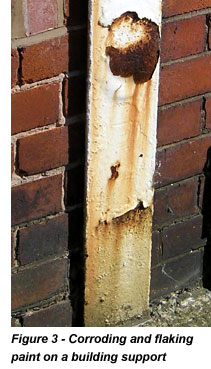
- Painting, spraying or dip coating to provide a diffusion barrier that slows or stops the ingress of corrosive species such as oxygen or chloride ions.
- Use of conversion coatings.
- Avoiding rough surfaces, as points protruding into the electrolyte preferentially corrode.
- Avoiding cracks or small pits: from the catchment-area principle, the anode at a crack tip (where oxygen availability is lower) is small with respect to the cathode, so attack can be relatively fast, giving pits. Aluminium and stainless steels, or other alloys with a passive film, are susceptible to pitting corrosion.
How We Analyse Corrosion Failure Mechanisms
Depending on the materials involved, SEM/EDX and optical microscopy, together with a combination of various surface analysis techniques, ion chromatography and FTIR, are used to analyse and identify the failure mechanism and then the source of the corrosion, for example the aggressive species present in an aqueous environment or the surface-film chemistry on a passivated alloy. The evidence gathered gives the basis for practical recommendations covering material selection, surface treatments, inhibitors and system design, so that the problem is avoided in the future.
Frequently Asked Questions About Corrosion Analysis
What is aqueous corrosion?
Aqueous corrosion is the electrochemical attack of a metal or alloy by a liquid or moist environment. It requires an anodic area, a cathodic area, an electrolyte and an electrical path between them; even surface moisture from humidity can complete the circuit and start the process.
How do you identify the cause of corrosion on a component?
We examine the affected area by SEM/EDX and optical microscopy, profile the surface chemistry with surface analysis techniques, and quantify aggressive species such as chlorides by ion chromatography. Together these identify the mechanism, pitting, stress corrosion cracking, galvanic or microbiological attack, and point to its source.
Can you investigate degradation of plastics and paint coatings?
Yes. Embrittlement, discolouration, delamination and solvent swelling of polymers and coatings are characterised by FTIR and optical microscopy, with element mapping by SEM/EDX where a metal interface is involved, so that the degradation mechanism can be matched to the likely environment.
What do you need to start a corrosion investigation?
A representative sample of the affected component, coating or residue, together with details of the service environment, the exposure history and when the problem first appeared. We will advise on sample preparation and recommend the most appropriate test sequence for your enquiry.
Request a Quote for Corrosion Analysis
Send us the affected component, coating or residue and our scientists in Blackburn, East Lancashire will recommend the right combination of tests and give you a clear interpretation of what caused the failure. As an independent, UKAS-accredited laboratory serving clients across the UK, we combine rigorous analysis with practical, cost-effective recommendations. Find out more about our corrosion, degradation and oxidation services and request a quote.